
THE KAN SYSTEMS JOURNAL / Wardrobes
Hinged or sliding wardrobe doors: a practical buying guide
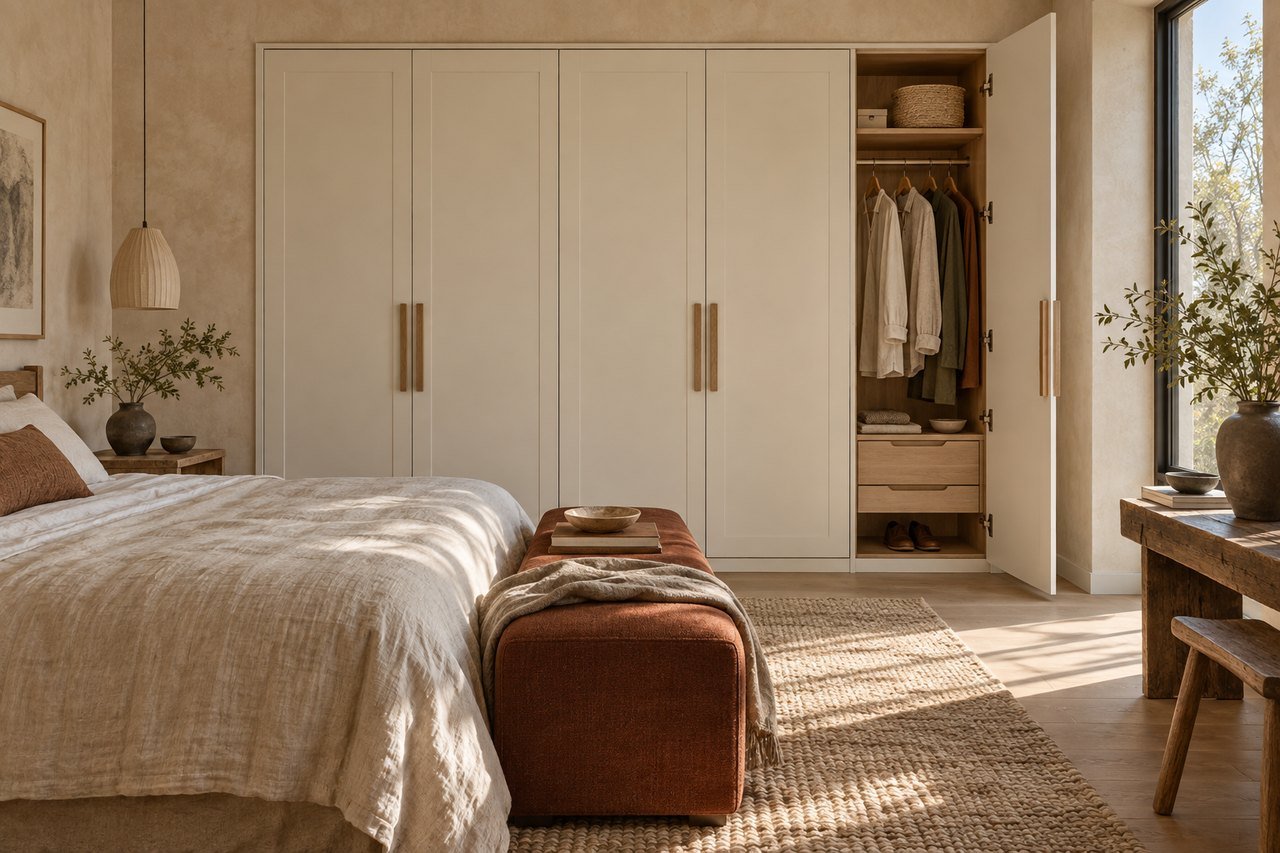
Choosing between hinged and sliding wardrobe doors is easier when you start with the room and your daily routine. The best option is the one that opens comfortably and gives you useful access to the storage behind it.
Before choosing a finish, put the wardrobe, bed and other furniture on a measured plan. Then compare the two door arrangements.
Start with the space in front
Hinged doors swing into the room, so their opening arc needs to be checked against the bed, side tables and other furniture. Sliding doors move across the wardrobe front and can be helpful where an outward door swing would be awkward.
Neither option removes the need for standing space or room to use internal drawers. Show these movements on the plan rather than assuming a sliding door solves every clearance issue.
Think about how much access you need
With a hinged arrangement, individual doors open to their compartments. Depending on the layout, you may be able to open several sections together. This can suit people who like to see different parts of their clothing collection at once.
In standard overlapping sliding arrangements, a door moves in front of another section, so the whole interior is not necessarily exposed at the same time. The usable opening depends on the number of doors and the selected system. Ask to see the proposed wardrobe with its doors in both open and closed positions.
Plan the inside and the doors together
Place hanging rails, shelves, drawers and accessories around what you store. Check that a drawer can pull out fully through the available opening and that handles, hinges or door overlaps do not obstruct it.
A wide internal drawer behind a narrow opening may look tidy in a closed-door drawing but be difficult to use. Ask your designer to check every moving component against the door arrangement. Our wardrobe interior planning guide explains how to organise the storage itself.
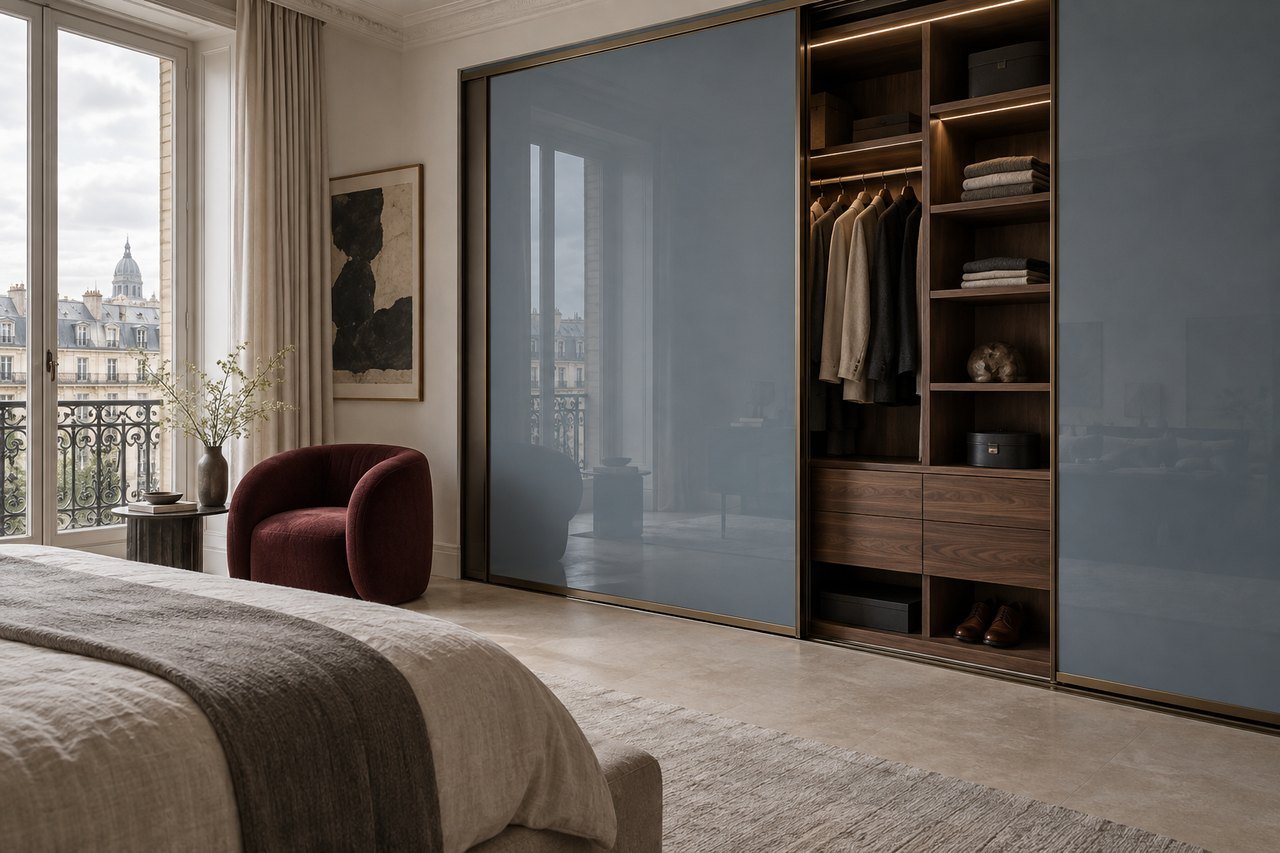
Specify the hardware for the actual doors
Ask for the hardware make and model, the permitted door dimensions and weight, and the closing features included. Sliding systems vary in their track arrangement and how doors are supported. Hinges also need to suit the selected door and opening.
Hettich’s sliding-door planning catalogue distinguishes different systems and shows why dimensions and material matter. Use the current specification for the proposed model when approving your wardrobe, rather than applying one hardware rating to every design.
Check the finish and everyday upkeep
View the actual finish sample in your bedroom’s lighting. Consider the handles, visible tracks and appearance when doors overlap or open. Ask how to clean the fronts and maintain the specified mechanisms.
If possible, operate a sample door. Check the feel of opening and closing, and ask what adjustment or service support is available after installation.
Compare the right configurations and prices
Kan Systems’ wardrobe starting offer is ₹19,950 for a 3-foot-wide × 7-foot-high wardrobe with lockable shutters on soft-close hinges. It includes one lockable drawer on a soft-close telescopic slide, one shelf and one hanger rail, plus GST, installation and delivery within a 20-kilometre radius.
This hinged configuration does not establish the price of a sliding wardrobe. Different dimensions, interiors, finishes or door systems need their own quotation. Read the Kitchen & Wardrobe Price Guide and confirm the selected package in writing.
Take a room plan, a storage list and a drawing of the doors in use. Together they help you compare access and appearance with fewer assumptions.
Explore Kan Systems wardrobes or share your room measurements and preferences. We manufacture in Meerut and serve homes across India.
Hettich: Sliding-door Ideas Book. Reviewed 6 October 2026. General system reference; your selected hardware is confirmed in the project specification.
