
THE KAN SYSTEMS JOURNAL / Wardrobes
Your wardrobe should fit your clothes—not the other way around
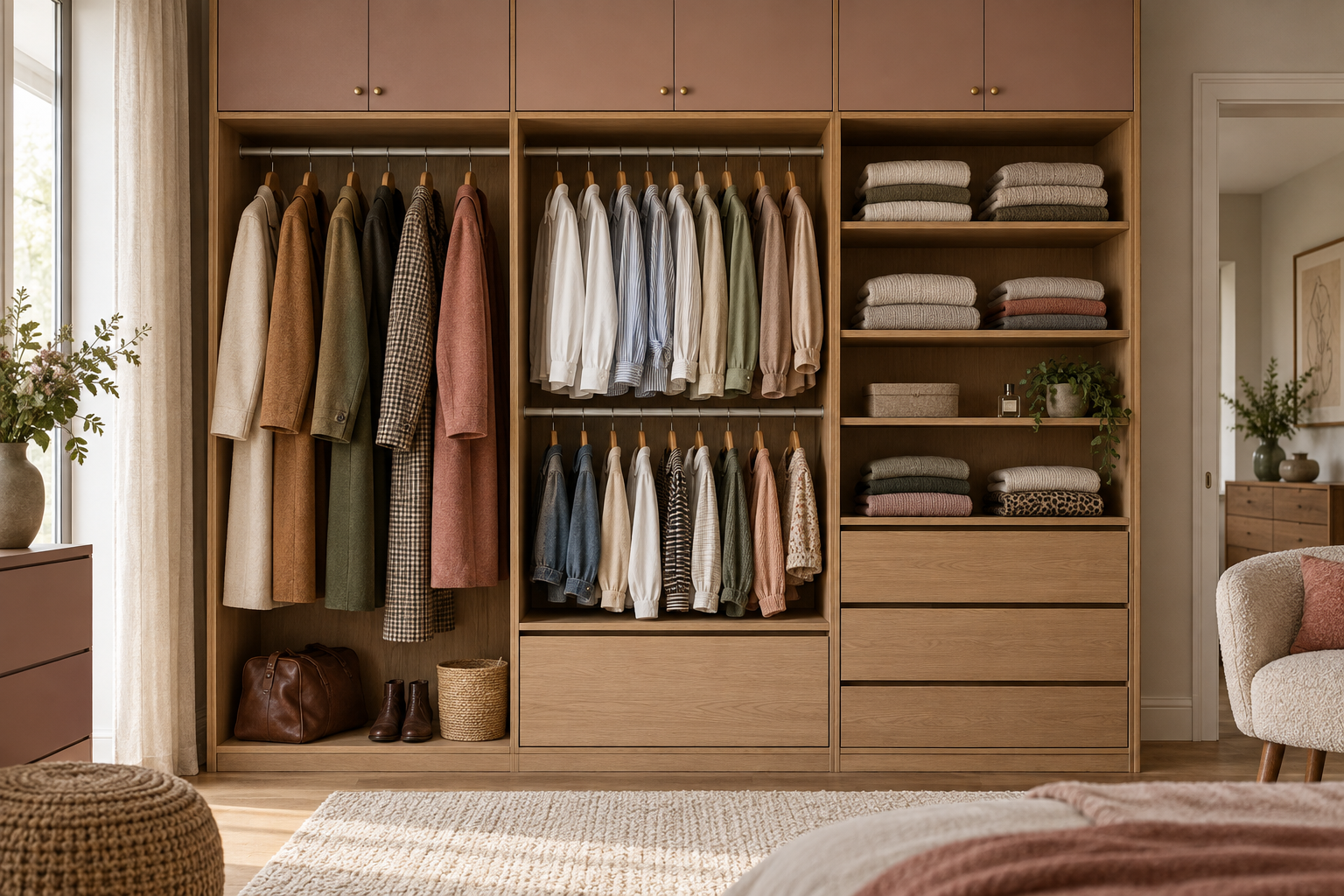
A beautiful wardrobe front can hide an awkward interior. The most useful starting point is an inventory of what needs to go inside—and how often you need to reach it.
Customisation is valuable when it makes everyday storage clearer. It is less useful when it only adds complicated fittings or an impressive finish. Use this guide to build a brief that reflects your room and routine.
Start with four piles
Sort your belongings into long hanging, short hanging, folded clothing and smaller accessories. Then add the items that do not fit those groups: suitcases, bedding, handbags, shoes or occasion wear. You do not need a perfect count, but you do need to understand which groups take up most of the space.
For a shared wardrobe, make separate lists for each person. One may need generous hanging space; the other may prefer drawers. Equal-width doors do not require identical interiors behind them.
Plan access, not just capacity
Check which shelves and rails you can comfortably reach. Put frequently used belongings in the most convenient positions. Reserve less accessible areas for lighter, occasional-use items, and discuss a suitable way to reach them safely.
Hettich’s wardrobe range includes garment lifts and interior organisation systems. The useful question is not how many accessories a wardrobe can contain, but whether a particular fitting improves access for the person using it. Check its operating movement, permitted load and compatibility with the cabinet before specifying it.
Choose doors with the room in mind
Draw the bed, bedside tables and circulation space onto the plan. Hinged doors need opening room; sliding doors change how much of the interior is accessible at once. Neither is automatically the right answer for every bedroom.
Ask your designer to show the drawers fully extended and the doors in their working positions. A drawer that looks generous on paper can become inconvenient if a door edge or nearby piece of furniture gets in the way.
Make small storage easy to see
Deep piles can hide what you own. Consider adjustable shelf spacing, divided drawers and dedicated places for small everyday objects. A jewellery organiser or trouser pull-out may be useful, but only if it matches the contents and remains easy to use.
Lighting can help you see inside a deep cabinet. Decide its purpose and placement early, including access for maintenance. Avoid treating lighting as a substitute for a clear storage layout.
Leave room for change
Clothing, routines and household needs change. Ask which shelves can be repositioned, which internal accessories can be replaced and how the hardware can be serviced. Keep a record of the agreed fittings and finishes with your project documents.
To set a starting budget, read our custom wardrobe starting price and inclusions, then discuss the dimensions and storage arrangement your room needs.
Pick five items you use every morning. On the proposed drawing, point to where each one will live and how you will take it out. If that feels awkward, revise the interior before approving the doors.
Explore custom wardrobes by Kan Systems and share your bedroom plan. Our Meerut manufacturing base allows the furniture brief to be developed around the room and its users.
Hettich: Wardrobe interior organisation · Hettich: Product Highlights 2026. The article offers independent planning advice; fittings depend on your specification.
